




CASE STUDY
Plumstead
Fire Safety for High-Rise Cladding Remediation
solutions@ramtechglobal.com | +1 (704) 559 1448
solutions@ramtechglobal.com | +44 (0)115 957 8282
This project involves the cladding remediation of a 119-unit high-rise residential building in Plumstead, London. The works are being delivered through a long-term, phased programme, with completion scheduled for Q1 2027. Throughout the remediation period, the building has remained occupied, requiring a fire safety strategy capable of protecting residents while accommodating ongoing construction activity.
The height of the building, the prolonged duration of the works, and the extensive use of full-height scaffolding created a complex and elevated fire risk environment. A solution was required that could maintain continuous detection, clear alarm activation, and reliable escalation for the full lifecycle of the remediation programme, without causing disruption to residents or compromising regulatory compliance.
Fire Risk Context During Cladding Remediation
High-rise cladding remediation presents a significantly different fire risk profile compared to short-term or low-rise construction projects. At Plumstead, the primary risk sat on the external elevations, where dangerous cladding materials were being removed and replaced over an extended period.
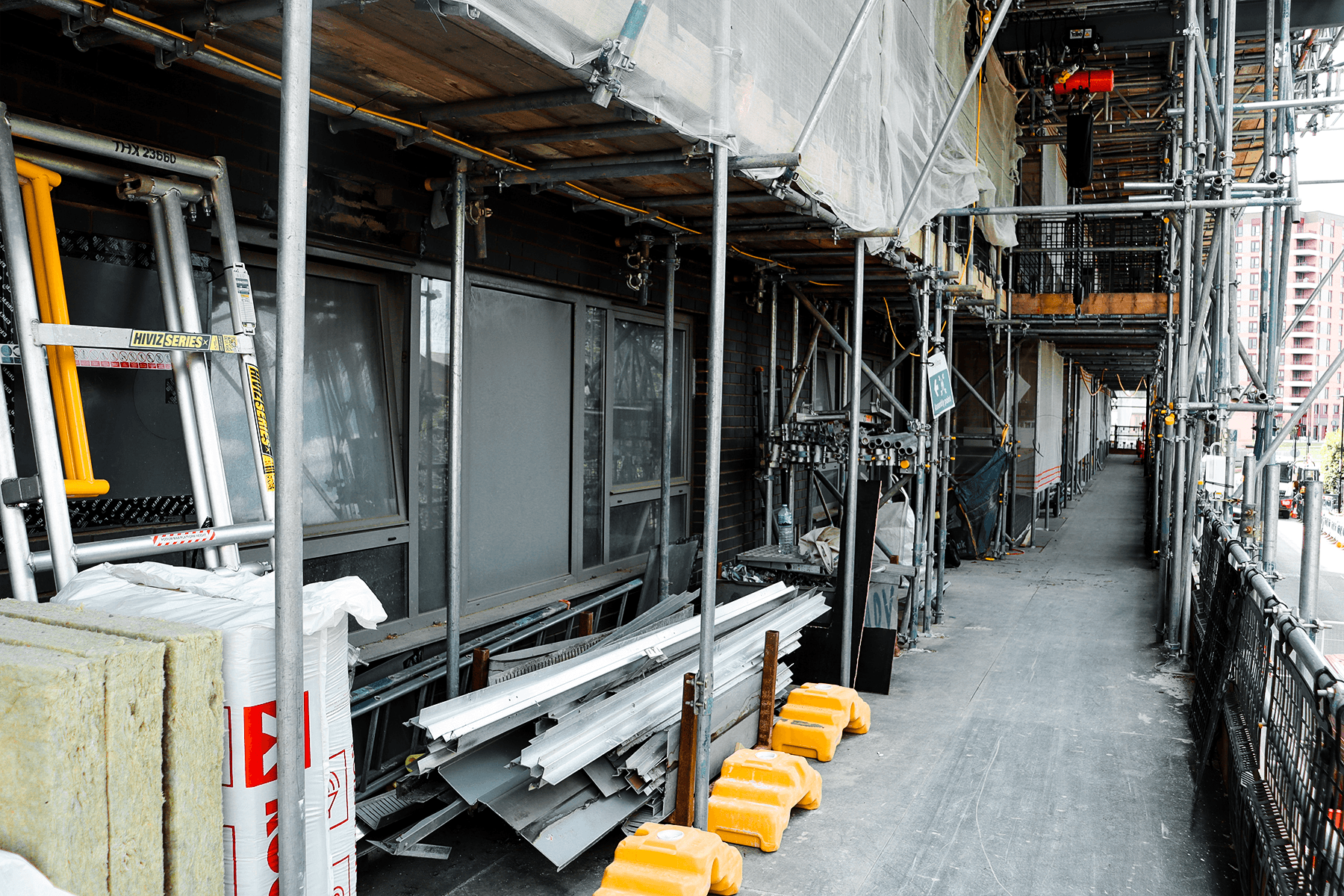
The introduction of full-height scaffolding created exposed work zones running the full height of the façade. These areas were subject to hot works, temporary electrical supplies, and the handling of combustible materials, all while residents remained in occupation behind the external wall system. The long programme duration further increased the likelihood of system interference, faults, or changing site conditions.
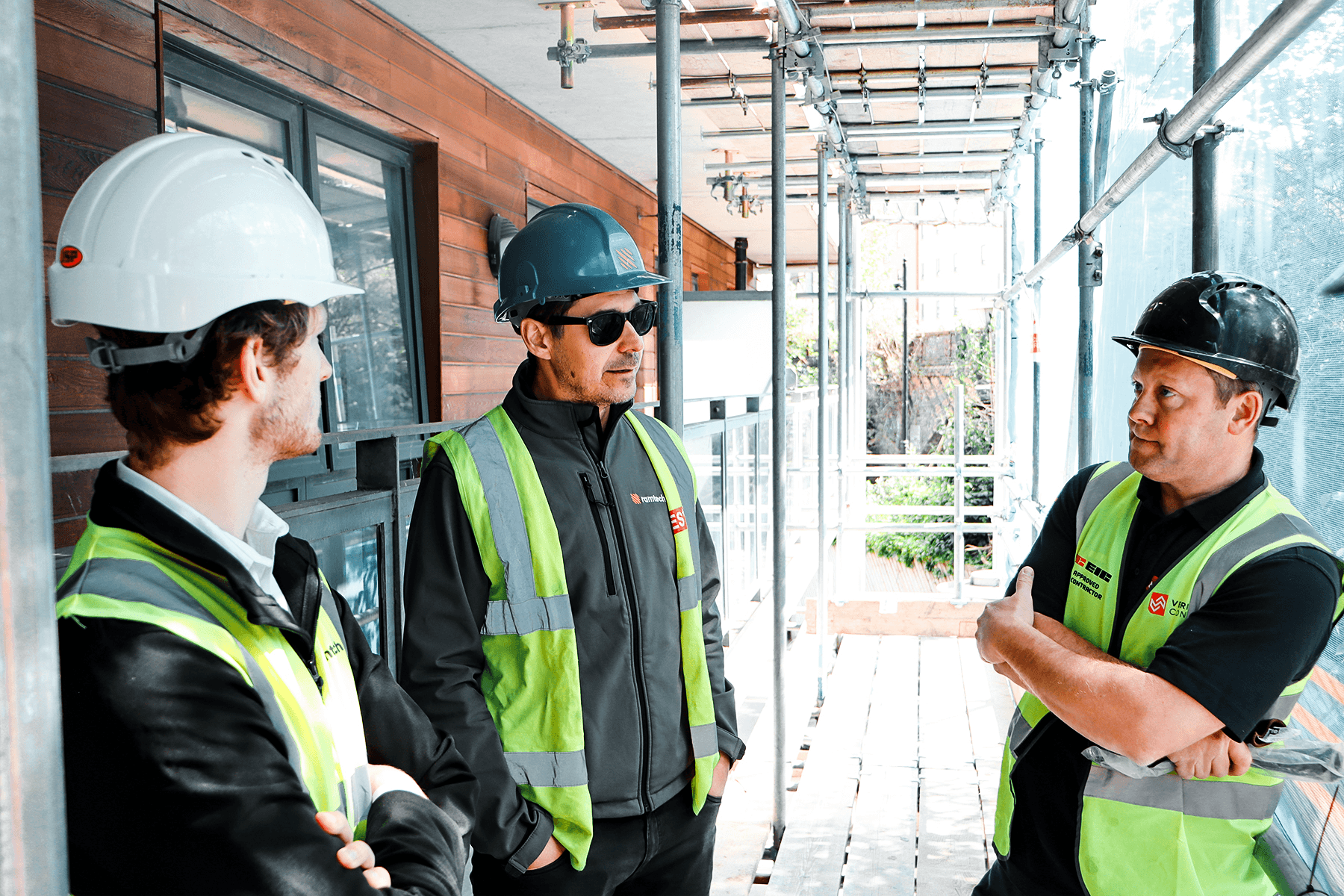
Under PAS 9980 External Wall Fire Risk Appraisal, the external wall system required ongoing assessment while remediation works were underway, reflecting the elevated risk associated with exposed and temporary conditions. Approved Document B requires that fire safety standards are maintained at all times, with heightened scrutiny applied to high-rise residential buildings. Guidance within HSG168 Fire Safety in Construction recognises the increased risk created by construction activity, particularly during long-term works, and emphasises the importance of early detection, clear alarm activation, and effective management.

A simple, robust, and effective 24/7 solution—giving the site team and residents real peace of mind. False alarms are minimised; only one call-out has occurred during normal working hours due to scaffolding adjustments.
John Quinn, Director at Veritas Contact
Fire Safety Strategy
Given the nature of the works, the fire safety strategy focused on providing early detection along the scaffolded elevations, combined with clear alarm activation and continuous monitoring. The objective was to ensure that any fire originating within the cladding remediation zone could be detected quickly and escalated without delay, while maintaining resident safety and minimising disruption within the occupied building.
Scaffold-Mounted Linear Heat Detection
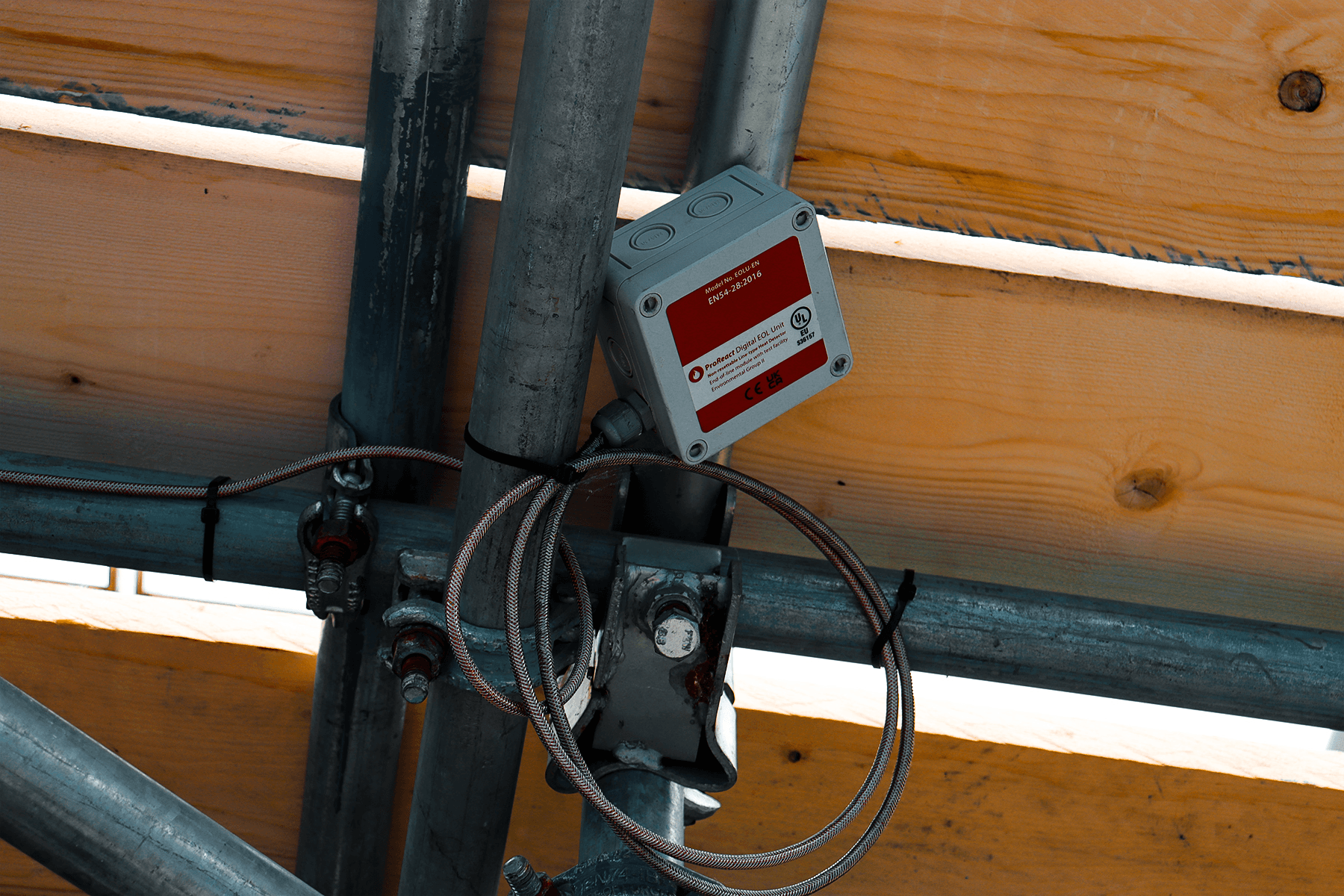
As part of the Ramtech fire safety solution, Thermocable Linear Heat Detection was installed along the scaffolded elevations of the building. Integrated into Ramtech’s eco-system, the linear heat detection provided continuous monitoring along the full height of the façade, directly protecting the areas where cladding remediation activities were taking place.
By deploying linear heat detection on the scaffolding, fire risk associated with hot works, temporary power, and exposed materials was monitored at source. The technology’s suitability for outdoor and construction environments ensured reliable detection throughout changing weather conditions and evolving scaffold layouts. This approach enabled early identification of fire in temporary and exposed work areas, maintaining protection even as the remediation works progressed.
Alarm Activation Using WES
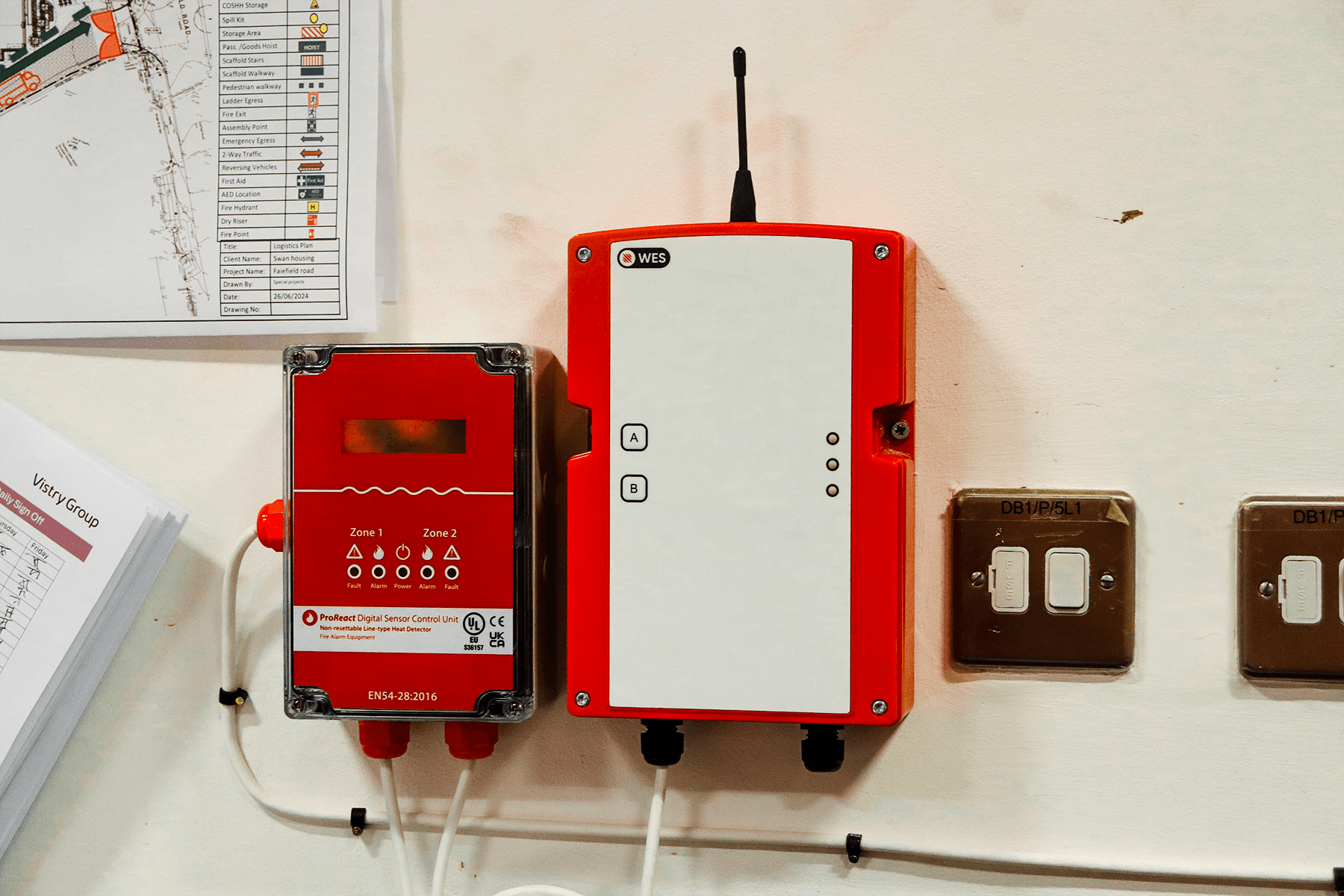
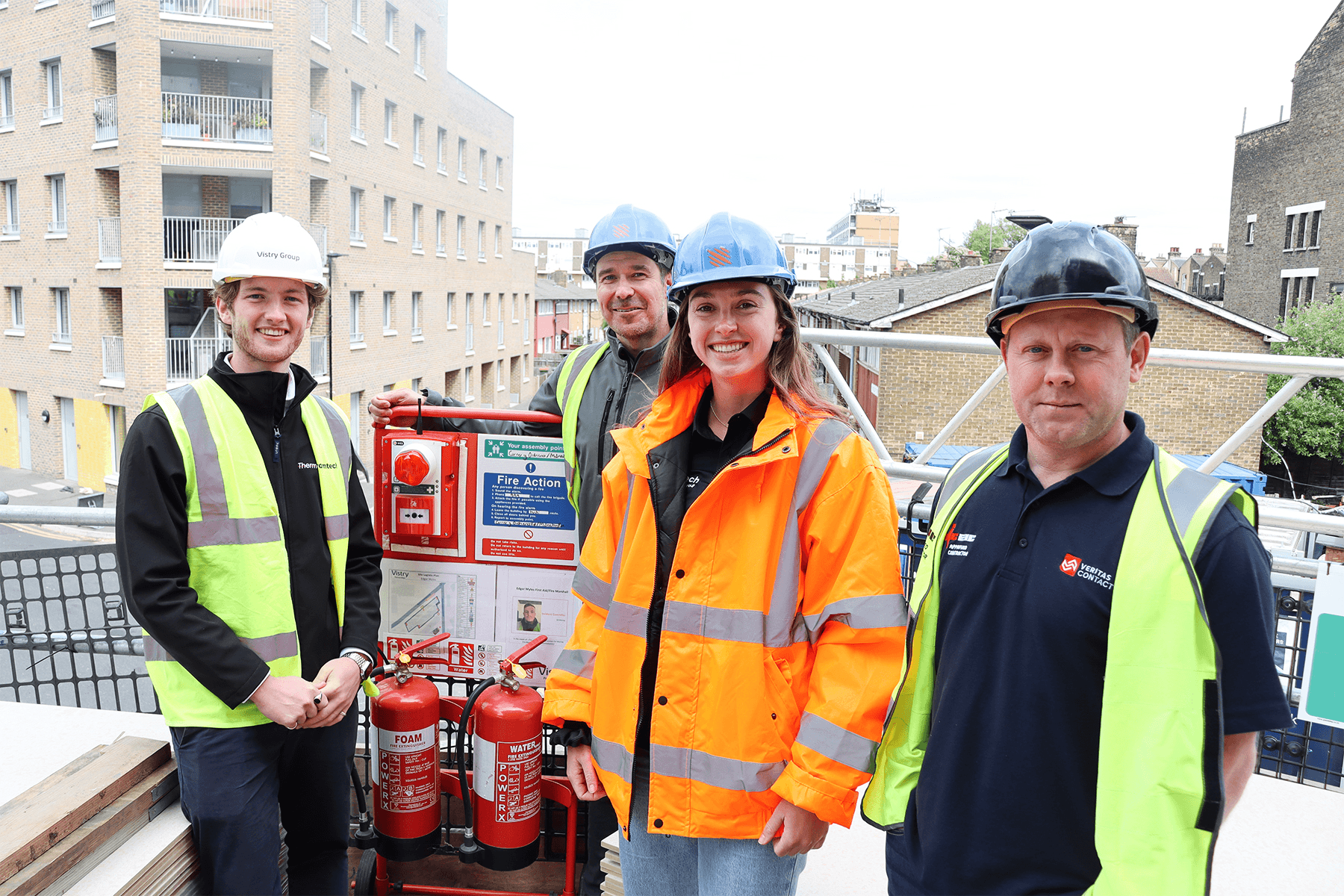
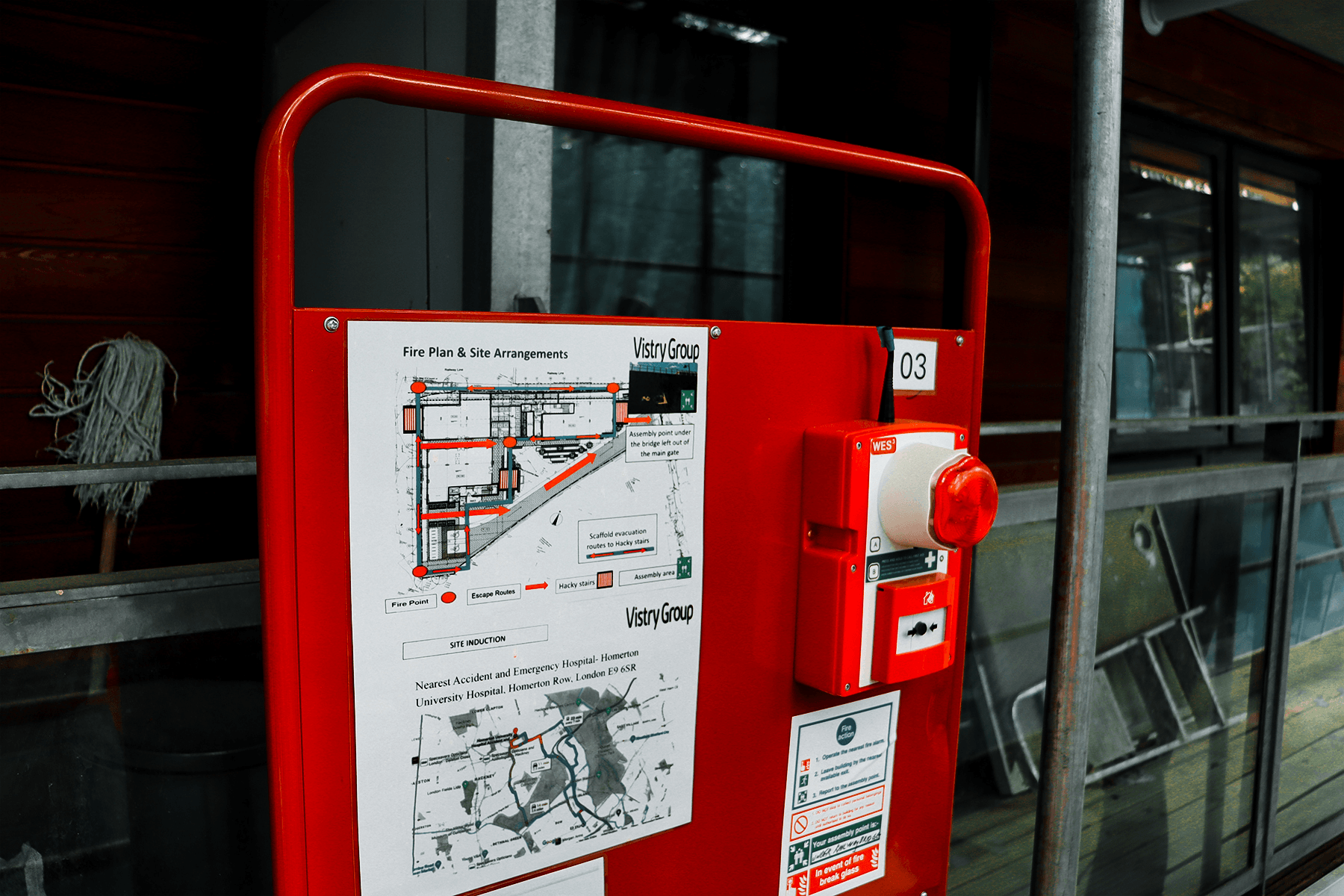
The system was configured so that activation of the scaffold-mounted linear heat detection triggered the WES3 wireless manual call points to alarm. This ensured a clear and immediate alarm response following detection on the scaffolding, while also allowing site teams to manually raise an alarm if a fire was observed.
The wireless nature of WES avoided the need for intrusive cabling through occupied residential areas, helping to maintain resident safety and reduce disruption throughout the remediation works. The flexibility of the system allowed it to adapt as scaffolding configurations and site conditions changed.
Continuous Monitoring with REACT
REACT provided continuous monitoring of the fire detection system for the duration of the project. Fire events and system faults, including those originating from the scaffold-mounted linear heat detection, were automatically escalated to the Alarm Receiving Centre.
This ensured 24/7 oversight of the system, supporting response during both working hours and out-of-hours periods. The integration between linear heat detection, WES, and REACT provided consistent visibility and control across a long-term, high-risk remediation programme.
Installation Partner: Veritas Contact
The full installation was delivered by our installation partner Veritas Contact, a competent contractor specialising in temporary and permanent site services for construction and commercial environments. Their experience across fire alarm installations, industrial and commercial electrical services, site infrastructure, and temporary works made them well suited to the demands of a live high-rise cladding remediation project.
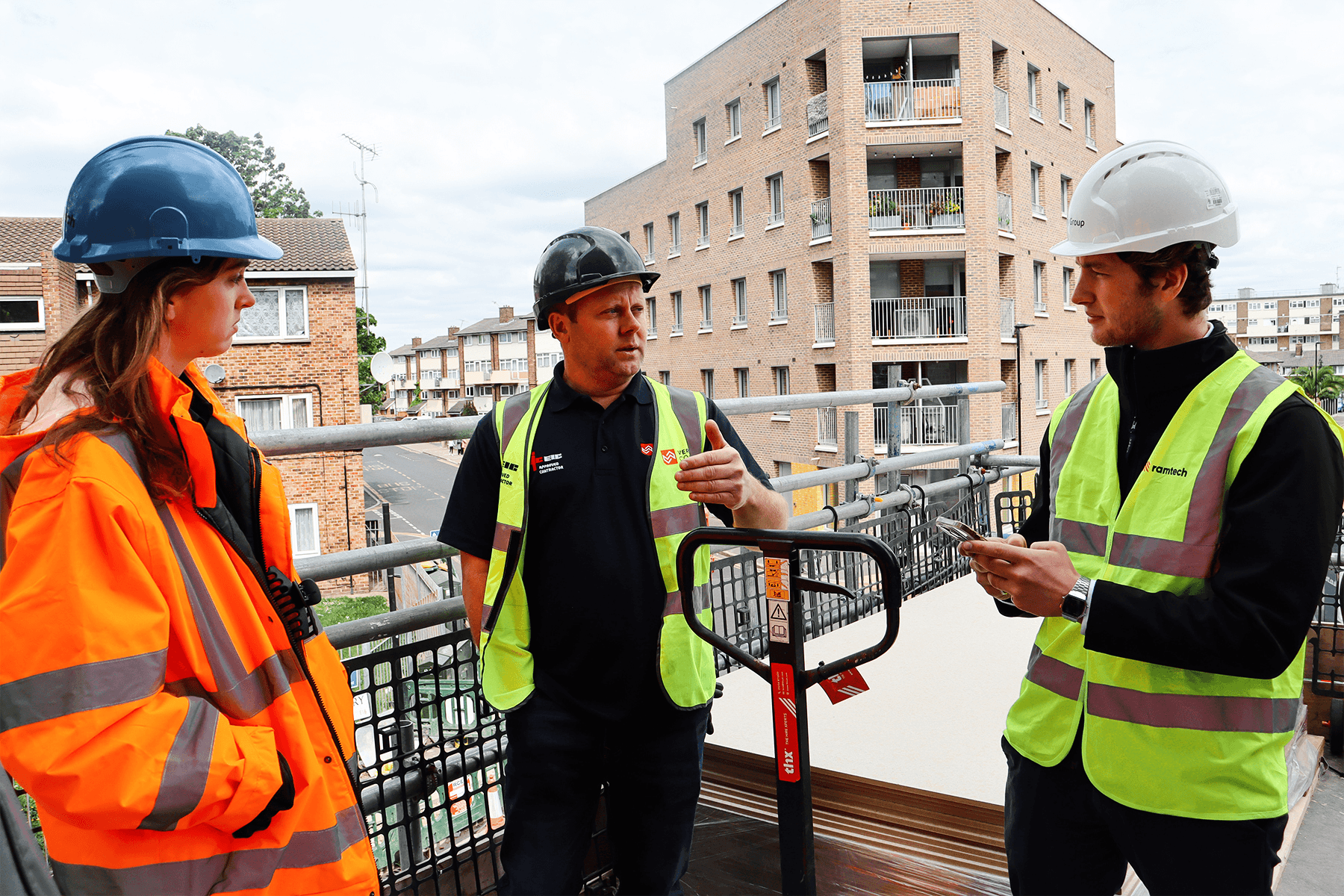
At Plumstead, Veritas Contact delivered the installation through a phased approach, carefully aligning the fire safety system with the building’s structure, scaffolding arrangements, and evolving works programme. The installation was completed over four visits, two days per visit, totalling eight days. “The system is simple to install and adaptable, as demonstrated during the phased approach over four visits — two days each, eight days in total.” John Quinn, Director at Veritas Contact
Outcome
The installed solution provided continuous fire detection focused on the scaffolded cladding remediation areas, ensuring early identification of fire risk throughout the works. Clear alarm activation and continuous monitoring were maintained across the long-term programme, supporting resident safety, site operations, and duty holder responsibilities. The approach delivered improved confidence for residents, contractors, and building stakeholders during a complex and high-risk high-rise remediation project.
For more information and to explore the benefits of our wireless safety solutions, please don’t hesitate to contact us.
Additionally, you can access detailed information in our WES3 brochure or our Construction brochure, providing insights into how our technology can revolutionise your construction projects while ensuring the utmost safety. We look forward to partnering with you on your journey towards safer and more successful construction ventures.